Friday, 20 May 2011

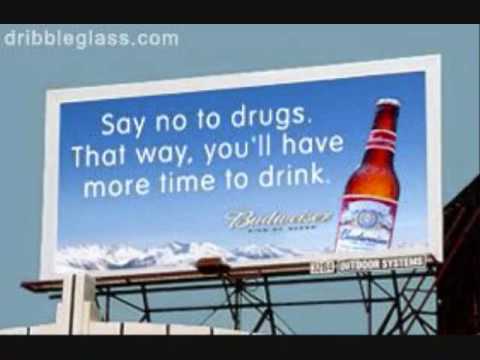
Week 9 - Irony In Advertising

Examples of Ironic Advertising Campaigns


'Just Do It Campaign' - Nike


'How Long Can You Live?' -  Anti Smoking Advert 


Be Stupid Campaign - Diesel Clothing


Ingham Chicken - Irony on Breast Cancer Awareness Initiatives


Chupa Chups - 'The Pleasure of Sucking' 


Beer Campaign - The Irony of replacing one bad habit with another 


Colgate - Stronger Teeth Campaign


Cordaid - 'People In Need Campaign'


Thursday, 12 May 2011

Week 7 - Agit Prop and Culture Jamming

Agit Prop originated out of Soviet Russia as a radical propaganda embodiment focused on promoting the ideals of communism, including the policies of the communist party and that of the Soviet State, through visual imagery that targeted post USSR Russian culture. At the time the concept of propaganda in Russia had no link to brain washing or visual black mail that enforced cultural groups to conform to corrupt ideals, rather groups such as Agit Prop employed propagandistic values in their efforts to encourage the norm of Russia's overall population to come to terms with the supposable political benefits that arose from Soviet Communism, using principles of Russian constructivist design to achieve this. However at the same time it is arguable that the Agit Prop formation was indeed employed by the Soviet Union to urge the people of Russia, through methods of agitation, to conform to the expectations of Soviet leaders, on various levels. Thus Agit Prop strove to employ propaganda in their designs, to act on the mind, whilst using agitation to draw on people's emotions. 
Merging both 'Agitation' and 'propaganda' together, Agit prop gave rise to the cliche of political propagandistic art and design, which expanded from its foundation in Russia to all over Europe, with the formation of the 'agit prop' theatre, eventually spreading abroad to America. As an agit prop initiative of the 1920s, the theatre was deemed to be highly politicised and leftist in political behaviour and attributes. In Russia the theatre's productions were notable for their use of cardboard characters that represented both the wicked, and good willed, with a reputation for ridiculing capitalism and any train of political thought outside that of Soviet Communism. It was as a result of the Americanised twist on Agit Prop theatre in the US, that the Agit Prop became more generalised to meaning any kind of highly politicised form of art or design. Under Western context however, agit prop, in contrast to it's emotive propaganda origins in Soviet Russia, was employed as negative propaganda that visually communicated left winged socialist ideals to the extreme, particularly within the UK during the 1980s. 
The main medium of Agit Prop has always been poster design, on which a political message was printed, alongside its propaganda image, as posters could be mass produced, were cost effective and could be printed on the go, particularly when Agit Prop groups were to travel across country and send their message to villages and towns. Following the October Revolution of 1917, Russian Agit prop groups would travel by train throughout Russia, broadcasting propaganda through performances and re-enactments. Agit Prop designers tied to these would reproduce Russian Constructivist posters that made use of both 'agitation' and political propaganda, and throw them out the window to passing villages.
Agit Prop overall, was not limited to art and design, however its political messages were streamed across all matter of the arts, including literature, music, and drama. Furthermore, Agit Prop's approach to agitating the emotions and working the minds of the public varied greatly between the western world and the continent of Europe. Europe, including Russia, focused on generating positive ideals, such as the benefits of government and political reforms, and the economical and agricultural growth of the state, through bold and emotive and design principles and elements, including bright, vibrant colours and constructivist line work. On the other hand, the western world employed Agit Prop, for negative connotations exploiting left winged political extremist points of views that brainwashed and manipulated the public and thus distorted public opinion. 


Russian Agit Prop Design, during the Soviet Union:


Culture Jamming 

Culture Jamming formed out of the 1980s, as the refreshed and revised contemporary take on Industrial Revolution's Agit Prop. Culture Jamming, ironically, is a culture in itself, coined in 1984, that strives to challenge and criticise the material values of low, popularised culture, and, through confronting imagery that is generally amusing but in necessary circumstances, disturbing, deconstructs commodity fetishism, erasing the glamour, sugar coating over an object, to reveal its true colours and purpose. More often than not, culture jamming takes advertised products out of their commodity context, and manipulates their meaning with alternate graphics and text, to give light to the negatives of the product concerned, as well as agitate the minds of consumers within the product's cultural interest groups. Inspired by both the political propaganda style of Agit Prop, and the radical initiatives of anti-consumerist social movements, and entwined with Guerilla semiotics and night discourse, Culture Jamming groups, such as Sydney's 'Bugger Up' group in the 80's, employ methods of subvertising to expose the truth behind the political assumptions associated with commercial culture and challenge commercial companies to lift their game and revise their moral beliefs and attitudes. Associated with the common tactics of subvertising in context of culture jamming is logo manipulation, ridiculing contemporary fashion and its impact on culture, and distorting product images, in order to question and challenge "what's cool", in today's popular culture, and to test the actual level of personal freedom and satisfaction that derives from product consumption. 

In certain circumstances culture jamming employs mass media to produce ironic and satirical commentaries on commodity fetishism and associated consumer goods, appropriating the original message of the medium and turning that message on itself, to make a critical statement and to contradict the selling proposition that product's company wishes to make. Generally culture jamming arises out of a direct reaction against social conformity, to oppose against mass production, and provide proof for the ways in which conformity in culture damages and poisons the mind of society and its potential to strip away the individuality of the consumer. The vast majority of culture jamming groups focus on critically challenging the status quo of social conformity and commodity fetishism and to react against the artificial glamour of consumerism created through contemporary advertising, however, culture jamming can at times also be targeted towards creating new forms of cultural production through more comical and emotive material. 

Spoof Advertising Examples of Culture Jamming 


Assignment 1 - Hitchock vs Tarrantino notes

Alfred Hitchock


Source - Alfred Hitchock Biography http://www.essortment.com/alfred-hitchcock-biography-20570.html

Subjective - 


Filmography Overview:


Hitchock's film career spirals out of the 1920's, the era of prolific film making.   

Irony of his film making against his personal profile :


Produced films, throughout his film career, of a mysterious and psychopathic nature, with the plot of murder as his prime focal point in both his silent and full motion picture films, however he admitted to be fearful of death, as far as his own life was concerned . Furthermore, Hitchock's films sparked Hollywood glamour, and ironic, coincidental romance, as well as a hint of eroticism and sexual lust between a  beautiful, strong willed blonde and a nervous, insecure man, however Hitchock is claimed, while being married long term to the love of his life, to be drowned in his own loneliness and in his own self separate from her, and, with the exception of the characters of his films, criticised to not have a friend in the world.


Result: The overwhelming darkness of his films led him to attain worldwide hollywood success, however also prevented him from enjoying. Furthermore, Hitchock's subjective fear of death and his lack of interest in immersing himself in the fame of his work, separated himself from both the thrilling subjects of his films and that of the Hollywood glamour figures. Therefore, Hitchock was not hole heartily a part of his films. 
Self Promotion and appreciation of his films from other film makers fuelled his professional success and gave him motivation and will power, which was absent in himself, to dominate the thriller movie industry. 


Conceptual-


Criticisms of Hitchock:


Due to his inability to ever be completely satisfied with the films he produced throughout his lifetime, and the emotional, psychological barrier between his subjective self and the nature of his films, Hitchock has been criticised conceptually by distinct groups of audiences both modern, during his time, and contemporary, to not be the ingenious mind behind his compositions, and therefore not directly or entirely responsible for the unique, mysterious profiles and reputation that his filmography as a whole has and continues to project, rather employing professional screen writers to give his characters personality and motivation and their cultural context, a veil of mystery. Hitchock's psychological barrier between his films however has not stopped the majority of the masses who have previewed his films to praise him as the 'Master of Suspense'.   


Wednesday, 6 April 2011

Week 6 Annie Leibovitz - Review of Photography exhibition

Photography of Annie Leibovitz 


Born October 2, 1949, Annie Leibovitz has lived out her long term career as a celebrity photographer, establishing the basis of her career as a staff photographer of Rolling Stones magazine in 1970, and in a brief three year period  as a result of her famed photographs of the Rolling Stone's members themselves (1971-1972), was awarded chief of Chief Photographer of the company, a title which she held until 1983. For ten years Annie Leibovitz contributions to Rolling Stone defined set the foundational characteristic's and personality of the magazine franchise for the present and future, as well as an infamous reputation for catching the 'behind the scenes' reality of holly wood and British celebrities, revealing their true colours, through power of image, to the world. Throughout this period, Leibovitz, found herself immersed in the lifestyles of the famed clients she photographed, including the radical life style of the Stones, as her primary aim in her practise was to capture the true nature character of her subjects, and thus was looked to photographer such as Robert Franks and Henri Cariter Bresson as her main influences. 

On December 8, 1980, Annie Leibovitz, perhaps most famed and heart warming, yet controversial work was formed, out of a photo shoot with John Lennon and the love of his life, Yoko Onno. Aiming for a look that reflected the romance of the 'Double Fantasy' album cover, Annie had Beatles legend Lennon curled up, but naked, upon his clothed wife, embracing her passion and love. In tribute to Lennon's assassination five hours later, Annie kept her promise with him and setting the photograph they had created in the photo shoot, on the front page of the Rolling Stones. 

Leibovitz's signature photographic style underwent a serious change in the 1980s, moving from her more radical and cheeky photographs for the 'Rolling Stones', to a more sophisticated and stylised approach, as a result of her exploration and newly found interest in tonal contrast through concentrated lighting, and the projection of glamour through elegant and innovative poses, and bold colours. During this period Leibovitz worked with various celebrities for Vanity Fair magazine, a considerable transition from 'Rolling Stones', focusing on materialism and glamour figures, as well as an international advertising campaign for American  Express, winning her a Clio award in 1987. 

From the 90s onwards, Leibovtiz continued, and will continue to explore the power of photography in creating narrative and prowess around celebrity figures, as well as shining a light of truth and genuity upon her subjects, one that delves deep into his or her life to bring across emotion whilst maintaining a shroud of mystery. 


Thursday, 24 March 2011

Week 5 - Semiotics

The Study of Semiotics :

Semiotics refers to the study of visual communication  and the manner in which  signs and symbols throughout history, involving the combination of typography and images as well as necessary design elements and principle, can produce meaning, to be interpreted by the viewer.
According to Semiotics a visual image, as a sign, is placed into one of three group, depending on its associated traits :
Icons, Symbols, and Indexes.

Icons

An Icon can be referred to as a sign that directly visualises an associated object or concept. Icons serve to visually represent the traits of something specific through  some kind of image and thus communicates the significant aspects of such. Icons do not have to be necessarily completely literal or concrete as an image, rather they communicate as a simple visual that employs particular traits of the associated object, or thing, and can be stylised.

Symbols

A symbolic sign is generally one which employs an array of simple images to convey meaning which is to be interpreted by the viewer. Symbolic signs are required to have a visual relationship with the viewer, in the sense that he or she should be able to automatically interpret them, and in effect, establish information from this symbol. Symbols, like icons, are generally simplistic, stylised images, that have little to no literal appearance, however, unlike icons, symbols are attributed to, and understood by, society as a whole, rather than a seclusive cultural group.

Index
An index can be defined as a combination of an icon and a symbol, which signifies and visually represents a certain character object, through a stereotype. An index instantly defines an action, without the observer considering the action to mean anything other than that which the index signifies, and serves to apply an automatic identity to a visually physical symptom. Smoke for example, is an index that automatically signifies fire, before the viewer even begins to consider another alternative meaning.


semiomyth_model.jpg